From Coloring Page to Embroidery Canvas: A Daisy Bouquet Review
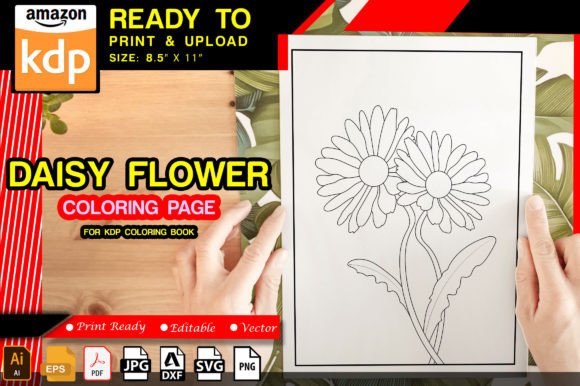
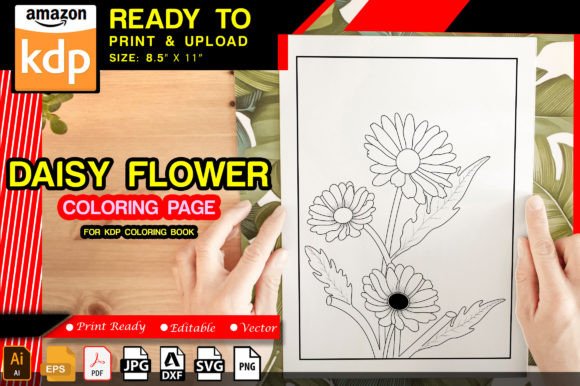
As a designer who reviews embroidery files for real-world projects, I look at a new design with a simple question: how will it look when the machine stops and I hold the actual stitched piece in my hands? Today, I'm considering the Daisy Flower Coloring Page Bouquet Line. This is a graphics file, categorized under Coloring Pages Amp, and it’s immediately clear this is a line-art digital coloring page intended for print. But for an embroidery designer, that’s just the starting point. We have to translate that digital image into thread and fabric.
The Immediate Mood: Casual, Cheerful, and Versatile
My first impression of this bouquet is pure, sunny simplicity. It's a loose collection of daisies, drawn with a friendly, sketch-like line quality. There’s no overly rigid perfection here, which is a plus. It feels approachable and casual, the kind of visual that whispers "handmade" rather than shouting "factory-made." The layout is open and forgiving, with natural gaps between stems and petals. This isn't a dense, formal floral arrangement; it's a cheerful bunch you might casually gather. That mood tells me it belongs on projects where warmth and personality are the goal—not necessarily luxury.
A Natural Fit for Everyday Handmade Products
Let’s walk through a real scenario. I’m preparing a custom embroidered tote bag for a small boutique client. They want something fresh, not too fussy, that appeals to a broad audience. This Daisy Bouquet line art comes to mind. The open lines suggest it would translate well into a primarily running stitch outline, perhaps with some light fill stitch in the flower centers for contrast. On a sturdy canvas tote, that approach would create a charming, textured look that holds up to use. It wouldn't feel overly delicate.
This design naturally extends to a whole category of friendly, everyday items. Think of a tea towel in a farmhouse-style kitchen, a simple pillow cover for a nursery or sunroom, or a unisex sweatshirt for a casual gift. It could become a sweet, small motif on the corner of a baby blanket or the breast of a relaxed-fit cap. Because the lines are clear and the shapes are recognizable even at a glance, it has strong giftability. A customer seeing this embroidered on an apron or a kitchen towel instantly understands the vibe: cheerful, homemade, thoughtful.
Where This Design Finds Its Strength
For crafters and small business owners selling on Etsy or at fairs, this design offers versatility. It’s a graphic asset that can be adapted. For pure embroidery, it’s a candidate for a clean outline style. It could also inspire an applique design, where fabric petals are cut and satin stitch edged, using the line art as a perfect template. As a digital product seller, the included AI file means you can scale it without quality loss for printable mockups or to create derived graphics for your branding.
The theme is perennial. Daisies are rarely trend-dependent, which gives a handmade product built around them a longer shelf life in your shop. It supports brand consistency for a business with a natural, wholesome aesthetic. Stitched onto a simple garment or home good, it elevates the product's value from generic to personalized without a huge technical burden.
Practical Considerations and Careful Application
Now, the practical designer’s mind kicks in. This is line art. That means its success in embroidery hinges entirely on how those lines are translated into stitches. A coloring page line can be wonderfully thin on screen, but in thread, it needs substance.
First, stitch density is key. If you try to render every thin line with a single, fine running stitch, the design might look fragile and could get lost, especially on textured fabrics like linen or sweater knits. I would likely opt for a slightly thicker running stitch or a very narrow satin stitch to give the lines presence. This must be tested.
Small hoop sizes present a challenge. If you shrink this bouquet down for a tiny patch or a baby item’s small detail, those clustered flower centers and overlapping stems could become a dense, muddled knot of thread. The open layout helps, but you must inspect the file at your intended small scale to see if the details remain clear.
Dark fabric backgrounds require careful thought. Light, daisy-themed thread on a dark navy or black sweatshirt can be stunning, but the contrast must be extreme. A pale yellow or cream fill stitch in the centers might pop, but the delicate petal outlines could vanish if the thread color isn’t chosen wisely. Always test on scrap fabric first.
I’d be cautious with stretchy fabrics and curved surfaces like caps. The design has a somewhat wide, horizontal footprint. On a curved baseball cap crown, the outer petals might distort. Proper stabilizer is non-negotiable here. Also, for products destined for frequent washing—like kitchen towels or baby clothes—a design with too many tiny, delicate stitch junctions might wear faster. Reinforcing with slightly denser stitches can add durability.
The Embroidery Designer's Essential Checklist
Before loading this file for a client project or a batch of shop merchandise, here’s my mental checklist:
- Test stitch it on scrap fabric that mimics your final product’s texture.
- Check thread color contrast for both light and dark background mockups.
- Review the stitch path in your software; ensure small details like tiny petals won’t become thread blobs.
- Confirm your intended hoop size can accommodate the design without forcing excessive scaling.
- Use proper stabilizer for the fabric type; this design’s success depends on clean line definition.
- If you plan to sell the finished embroidered product commercially, verify the licensing terms of the original Daisy Flower Coloring Page Bouquet Line file. Since it’s marketed for use on Amazon KDP and other marketplaces, clarify if that extends to creating and selling physical embroidered goods.
- Consider creating a black-and-white stitched sample. It reveals clarity issues without color distracting you.
The Final Take: A Graphic with Handmade Potential
Evaluating the Daisy Flower Coloring Page Bouquet Line from an embroidery perspective, I see a graphic asset with strong, adaptable character. It won’t automatically become a perfect embroidery file without your design intervention—you’ll need to think about stitch types, density, and scale. But that’s our job as makers.
Its true value lies in that cheerful, sketch-like personality. In a market where customers crave genuine handmade presentation, this design, when stitched thoughtfully, can deliver that friendly, artisanal touch. It’s not for every project; it wouldn’t suit a formal, dense-stitch corporate logo. But for the crafter making personalized gifts, the small shop owner stocking embroidered tea towels and totes, or the apparel decorator looking for a perennial, crowd-pleasing floral motif, it’s a compelling starting point.
Remember, the file is a blueprint. The thread, the fabric, and your choices in translating those lines will determine the final product’s appeal, professionalism, and durability. Test it, adapt it, and let that daisy bouquet become something uniquely tangible in your hands.