Assessing Minimalist Boho Coloring Pages for Client Projects
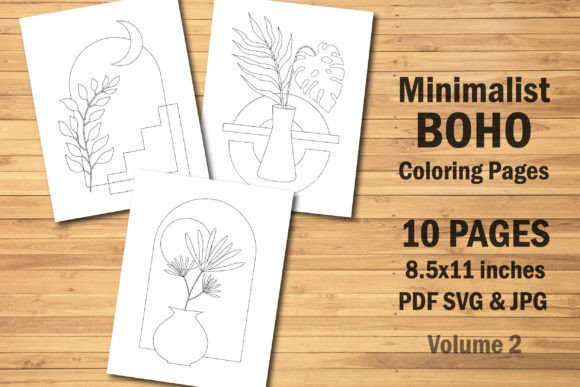
When a new design asset arrives for consideration, my first question isn’t about its beauty, but about its utility. Can it serve a real project? Opening Minimalist Boho Coloring Pages, my immediate impression is one of serene, controlled artistry. This isn’t a chaotic, dense collection; it’s a curated set of illustrations where every line feels deliberate. The mood is calm, modern, and slightly organic—a perfect hybrid of clean lines and gentle, natural motifs. This visual style whispers rather than shouts, making it inherently suitable for clients who need to communicate mindfulness, handmade quality, or a boutique sensibility.
The Right Project for This Visual Tone
I pictured a recent client project: a small business launching a line of herbal teas with an emphasis on self-care. Their branding needed to feel approachable and artful, not corporate. These coloring pages immediately suggested themselves not as activities, but as foundational graphic design assets. The minimalist boho elements could anchor the visual concept. They naturally fit projects where the audience values craftsmanship: an Etsy shop for woven goods, a local yoga studio’s event posters, a seasonal campaign for a ceramicist, or the packaging for a handmade candle line. This isn't for fast-paced tech startups; it’s for brands built on authenticity and tactile appeal.
Where These Illustrations Elevate Real Design Work
In practical application, these illustrations perform exceptionally well as decorative accents and thematic anchors. For brand identity, specific motifs could be extracted and simplified into a secondary logo or brand mark. In packaging design, they offer ready-made elements for product labels, box patterns, or wrap details. For social media graphics and Pinterest pins, they provide instant, cohesive visual content that establishes mood. As printable designs, they’re ideal for wall art, invitations, or merchandise like t-shirt designs and tote bags, especially for print-on-demand or Cricut projects. Their simplicity makes them excellent for large layout areas like website hero graphics or campaign posters, where they can create atmosphere without overwhelming the message.
Practical Constraints and Designer Checks
However, a professional review requires noting limitations. In very small sizes, the fine lines might lose definition, so using them as tiny icons in crowded layouts is risky. They should be used carefully on complex, textured backgrounds where the minimalist lines could get lost. While they pair beautifully with clean sans serif fonts for modern contrast, or script fonts for added warmth, they might clash with very rigid, corporate typography. Their strength is in supporting a brand’s visual story, not being the sole, stark focal point in a minimalist branding system that demands absolute geometric purity.
Impact on Brand Perception and Usability
Integrating these assets affects several critical design outcomes. Readability remains high if they are used as background textures or marginal decorations, not placed over text blocks. Their consistent style aids brand consistency across marketing visuals, from digital ads to editorial design. The emotional appeal is clear: they evoke calm and creativity, which can deepen audience engagement for the right demographic. For a handmade business, using such artful illustrations can enhance the visual trust and perceived professionalism of the entire project, signaling attention to detail.
Essential Pre-Use Tests for Any Designer
Before committing this asset to a client’s commercial design, I run a standard set of tests. First, I view the files in black and white to ensure the linework holds structural integrity without color. I check contrast by placing elements on both light and dark backgrounds in a product mockup. I preview them at actual use sizes—small for a sticker design, large for a poster. If the files include SVG format, I test the vector editability to confirm I can adjust colors or combine shapes for a unique logo design. I always confirm the commercial license terms for use in digital products or physical goods. Lastly, a test print is crucial; even as a digital product, many end uses are printable designs, so line crispness matters.
A Versatile Asset for the Creative Marketplace
Ultimately, Minimalist Boho Coloring Pages transcends its name. It’s a versatile design bundle of illustrations ready for the creative marketplace. For content creators and bloggers, they offer ready-made blog visuals. For digital sellers, they can become part of Canva templates or sublimation designs. Their precision-crafted nature means they slot neatly into a professional workflow, saving hours of creation time while providing a coherent visual language. They ignite the artistic spirit not just of the end-user, but of the designer crafting a complete, polished project for a client. When the project demands a whisper of nature, a breath of calm, and a touch of modern handmade elegance, this collection becomes a surprisingly powerful and practical tool in the graphic design asset toolkit.